About MBT Rebar Couplers
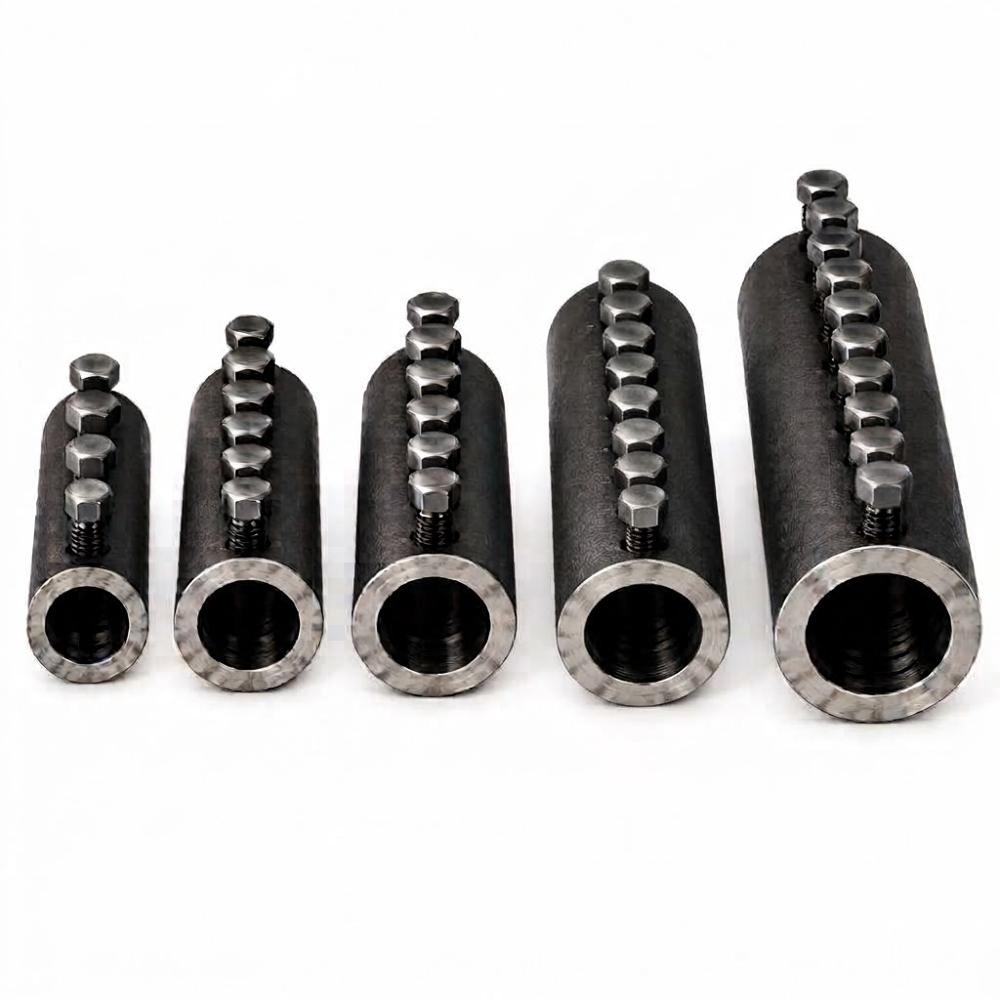
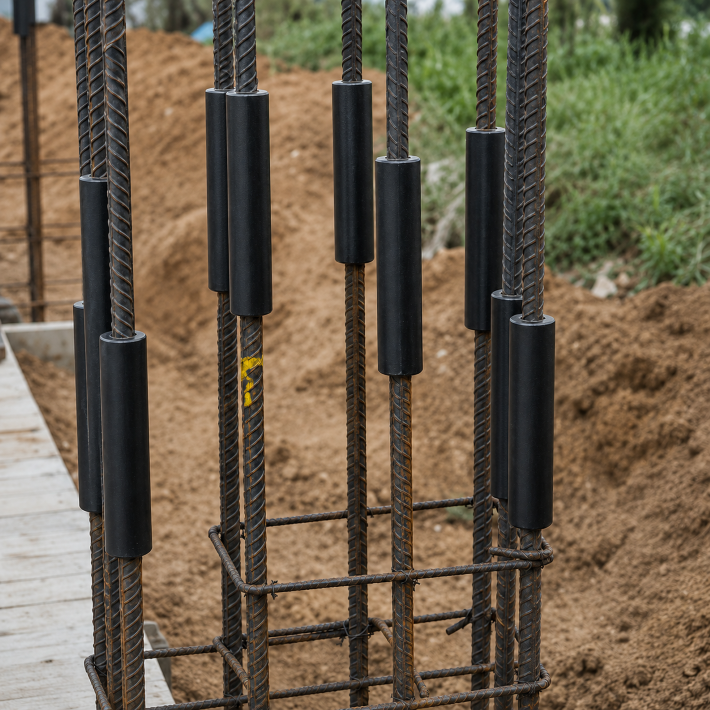
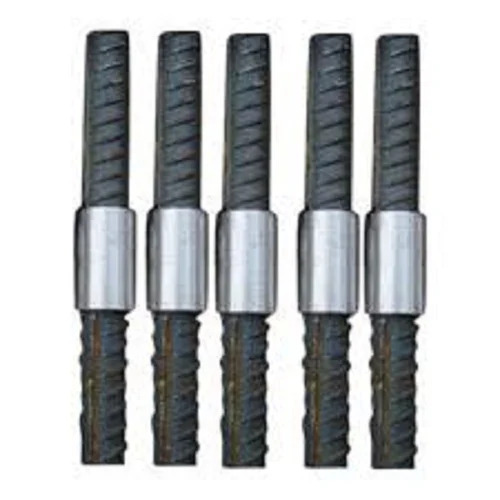
MBT couplers (which stand for Mechanical Bolted Type or Mechanical Bolt-Tension couplers) are heavy-duty mechanical devices used in construction to join two reinforcing steel bars (rebar) end-to-end.
Unlike traditional rebar splicing methods that rely on overlapping, welding, or threading, MBT couplers use a series of high-strength locking bolts to grip the rebars mechanically.
Key Features of MBT Couplers
- No Threading Required: Traditional mechanical couplers require cutting precise threads onto the ends of the rebar. MBT couplers work directly on plain or deformed bars without any end preparation.
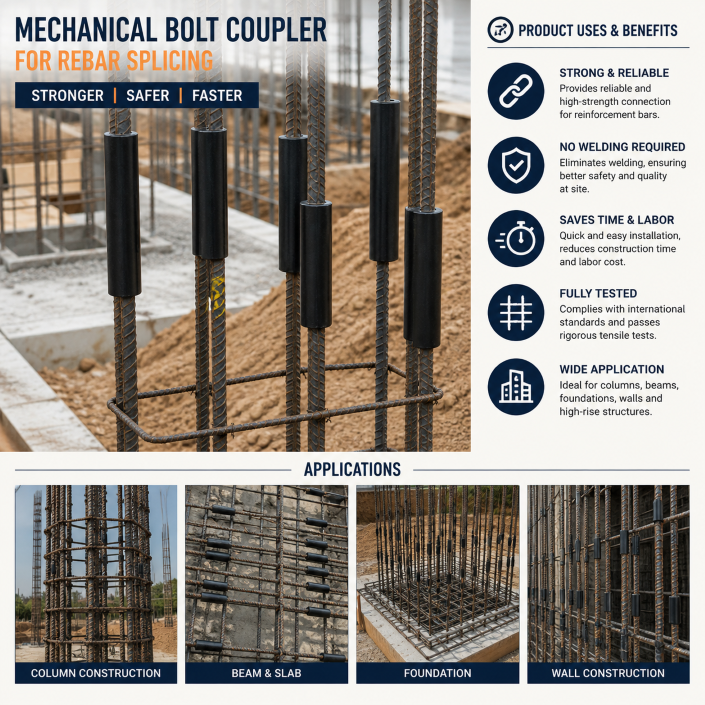
- No Welding Required: Welding rebar can create heat-affected zones that weaken the steel or pose fire hazards. MBT couplers eliminate the need for welding entirely.
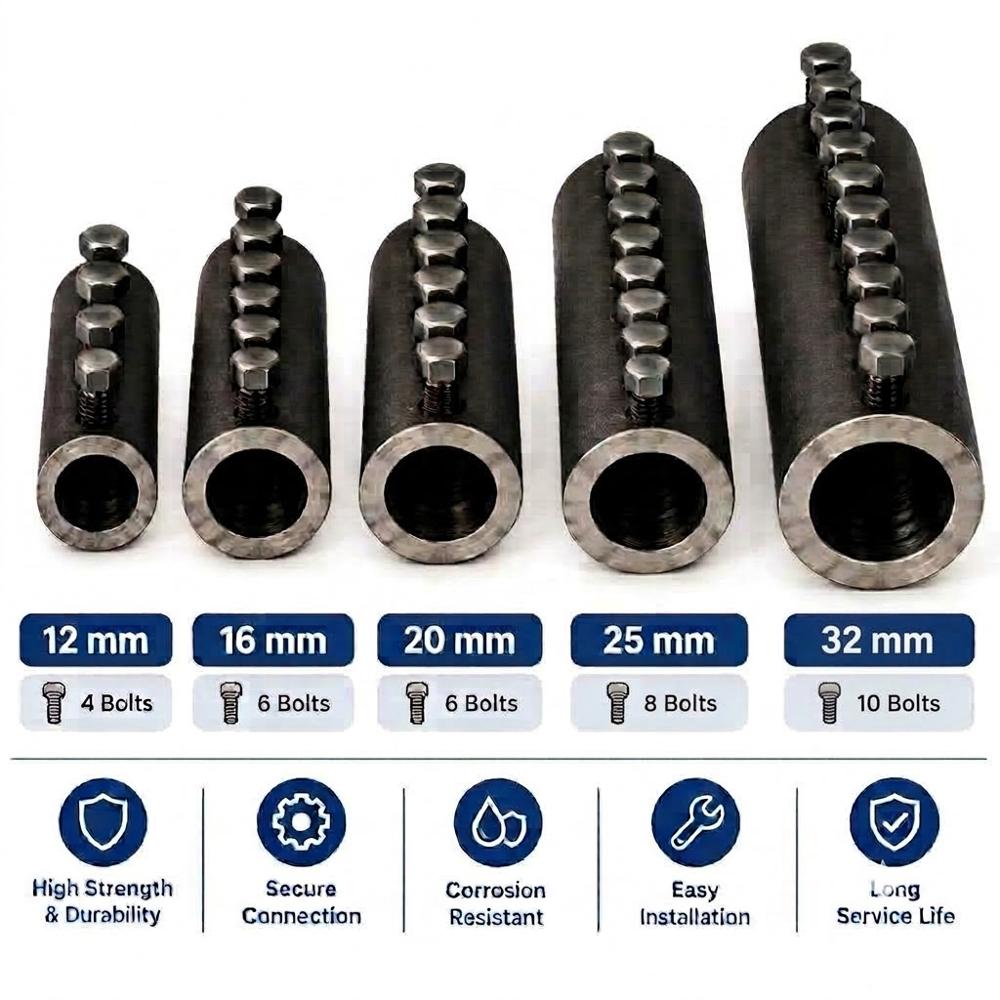
- High-Strength Locking Bolts: The coupler sleeve features rows of locking bolts. When tightened (often using a torque wrench or via shear-head bolts that snap off at the correct tension), these bolts bite deeply into the rebar, creating a secure connection that transfers tensile and compressive loads efficiently.
Why Are They Used? (Advantages)
- Ideal for Retrofits and Repairs: If reinforcement bars are already embedded in existing concrete and cannot be rotated or accessed with threading machines, MBT couplers are often the only viable solution for building extensions or bridge widening.
- Speed and Efficiency: They can be installed quickly using standard hand or power tools, reducing construction downtime and labor dependency.
- Reduced Congestion: In heavily reinforced areas (like column-beam junctions), using couplers instead of traditional rebar overlaps significantly reduces steel congestion, allowing concrete to flow and pack more easily.
- Reliable Load Transfer: They are engineered to meet strict international standards (such as ACI 318, ISO 15835, and BS 8110) to ensure they match or exceed the yield and tensile strength of the connected bars.
Common Applications
- Bridges, flyovers, and highways
- Metro rail and tunnel infrastructure
- Seismic retrofitting and structural strengthening
- High-rise RCC buildings
- Repair work where existing bars are exposed

 Send Inquiry




 Send Inquiry


 Send Inquiry
